Proponents of the use of medical marijuana like to start speeches and articles by quickly stating that cannabinoids are of proven value in treating many diseases.
Poppycock. This site has stated repeatedly: not true, not true, not true.
Now the evidence is in, and we were right. JAMA confirms that the evidence supporting the effectiveness of cannabinoids is tenuous at best. And risk of side effects with cannabinoids to treat anything is high.
Given that multiple sclerosis (MS) is associated with cognitive (reasoning) deterioration, researchers at the University of Toronto, in Ontario, determined the neuropsychological effects of cannabis use in these patients.
Cognitive impairment is common in multiple sclerosis (MS), but few studies have examined this relationship.
Researchers at MidAmerica Neuroscience Institute in Lenexa, Kansas, reported their findings during the Consortium of Multiple Sclerosis Centers 24th Annual Conference and the Third Joint Meeting of Americas Committee for Treatment and Research in Multiple Sclerosis. Continue reading Relationship between vitamin D and learning in MS→
Fatigue is a common symptom of multiple sclerosis (MS) that challenges patients in their daily activities.
Researchers at the University of Illinois at Chicago compared teleconference to face-to-face, group-based fatigue self-management. The results were reported during the Joint Consortium of Multiple Sclerosis Centers and America’s Committee on Treatment and Research in Multiple Sclerosis meeting. Continue reading Teleconferencing for fatigue managment in MS patients→
Attorney General Eric Holder says the US Justice Department will no longer raid medical marijuana clubs. His declaration is a fulfillment of a campaign promise by Barack Obama, and marks a major shift from the previous administration.
During the annual meeting of the American Academy of Neurology this April, researchers from Stanford University, in California will report, “Women who have multiple sclerosis (MS) may reduce their risk for relapse after pregnancy if they breast-feed.”
Researchers from the Medical University of South Carolina in Charleston have published a detailed review.
Their interest relates to the needs of vitamin D in the breastfeeding mother and her infant and child, but they also present a detailed and well-referenced review. Continue reading Update on vitamin D→
Researchers from Italy and the US studied changes in psychological symptoms, reasoning, abuse, tolerability, quality of life, fatigue, and ability to control movement in patients with multiple sclerosis (MS) who had never before been exposed to cannabis. Continue reading Response to cannabis by non-smokers with MS→





 Researchers from the University of Patras Medical School in Greece have
 Researchers from Mayo Clinic, in Scottsdale, Arizona
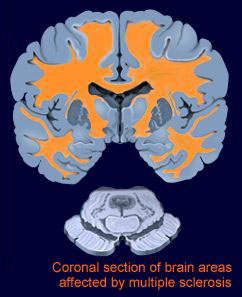 In a word, “frustration.” People with multiple sclerosis (MS) use CAM because conventional treatments have many side effects and they are dissatisfied with the results.
 During the annual meeting of the American Academy of Neurology this April, researchers from Stanford University, in California will
 Researchers from the Medical University of South Carolina in Charleston have published a detailed
 Â Up to two-thirds of patients with MS use CAM.